
Rope Access Safety: Essential Practices Every Technician Must Know
A comprehensive guide to rope access safety — from equipment checks and rescue planning to common hazards and how to avoid them. Written by industry professionals who work at height every day.
Safety isn't just a box to tick in rope access — it's the reason you go home at the end of the day. The industry's safety record is remarkably good compared to other methods of working at height, but that record exists because of rigorous standards, not luck.
Whether you're a new Level 1 or an experienced supervisor, understanding and practicing safe rope access is non-negotiable. This guide covers the essential safety practices that keep technicians alive and projects running smoothly.
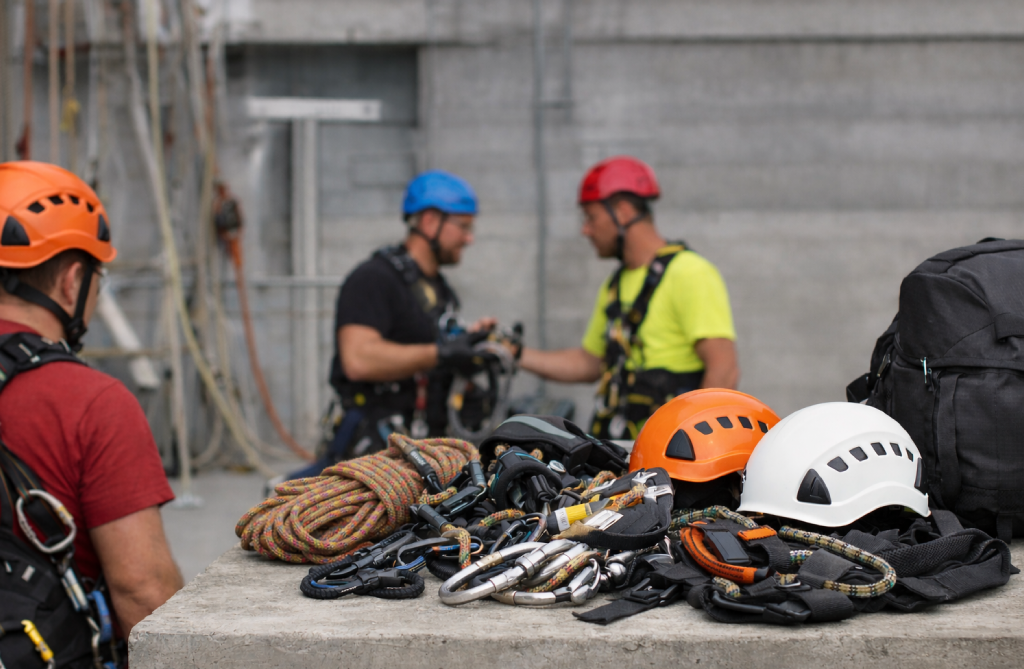
Why Rope Access Has a Strong Safety Record
Let's start with some context. According to IRATA's published safety data, the rope access industry consistently maintains one of the lowest accident rates of any work-at-height method. The fatality rate is a fraction of what you see in scaffolding, cherry picker, or ladder-based work.
Why? Three reasons:
- Redundancy — You always have two independent attachment points (working line + safety line)
- Training standards — IRATA and SPRAT certification ensures baseline competency
- Rescue capability — Every work team must be able to perform a rescue within minutes
This doesn't mean rope access is risk-free. It means the risks are managed through systematic practices.
The Golden Rules of Rope Access Safety
These principles underpin everything else:
1. Always Use Two Independent Systems
- Attached to separate anchor points
- Independently rigged
- Each capable of holding your full weight in a fall
If one system fails completely, the other catches you. This redundancy is the foundation of rope access safety.
2. Check Your Equipment Before Every Use
Before you go on the ropes:
- Visual inspection of harness for wear, cuts, fraying
- Check stitching integrity on all soft goods
- Inspect carabiners for gate function and locking mechanisms
- Check descender for wear and smooth operation
- Inspect ascenders for cam function and frame integrity
- Check ropes for damage, contamination, soft spots
- Verify backup device functions correctly
- Cuts or abrasion on textile equipment
- Corrosion or cracks on metallic equipment
- Deformation of carabiners or connectors
- UV damage (fading, stiffness) on ropes and slings
- Any sign of chemical contamination
If anything fails inspection, remove it from service immediately. No exceptions.
3. Never Work Alone on Ropes
IRATA requires a minimum of two technicians for any rope access operation, with a Level 3 supervisor overseeing. This isn't bureaucracy — it's essential because:
- If you become incapacitated, someone must rescue you
- Suspension trauma (harness hang syndrome) can become life-threatening within minutes
- Communication and buddy checks prevent mistakes
Solo rope access work is never acceptable under IRATA or SPRAT standards.
4. Have a Rescue Plan Before You Start
Every rope access operation must have a rescue plan. Before anyone goes on the ropes:
- Identify how a casualty would be reached
- Determine the rescue method for each work position
- Ensure rescue equipment is available and ready
- Confirm all team members know their rescue roles
- Practice the rescue if the setup is complex
The standard: you should be able to reach and begin rescue of an incapacitated technician within 10 minutes. In practice, aim for much faster.
5. Understand Suspension Trauma
Suspension trauma (also called suspension syncope or harness hang syndrome) is a real danger that every technician must understand.
What happens: When you're suspended motionless in a harness, blood pools in your legs. Your body can't circulate it properly. Without intervention, this can lead to unconsciousness and eventually death — potentially within 20-30 minutes.
- Unconsciousness while suspended
- Inability to move legs
- Tight leg loops restricting circulation
- Extended time in suspension
- Never leave someone hanging motionless
- If suspended and unable to climb, keep legs moving
- Use trauma straps (if equipped) to stand in and relieve leg pressure
- Rescue any suspended casualty as quickly as possible
- Do NOT lay someone flat immediately after prolonged suspension
- Keep them in a sitting or slightly reclined position
- Monitor for signs of reflow syndrome
- Seek medical attention
This is one of the most important safety topics in rope access. Take it seriously.
Equipment Safety: Beyond Pre-Use Checks
Regular Inspections
Beyond daily pre-use checks, equipment needs formal inspection:
- Thorough examination by a competent person
- Documentation and recording
- Required under LOLER regulations in the UK and similar regulations elsewhere
- A fall onto the equipment
- Chemical or heat exposure
- Visible damage
- Any doubt about condition
Equipment Retirement
All rope access equipment has a limited lifespan:
- Manufacturer's recommended lifespan (typically 5-10 years from manufacture)
- Immediately if damaged or failed inspection
- Consider more frequent replacement with heavy use
- Manufacturer's recommendations
- When worn beyond acceptable limits
- If deformed, cracked, or corroded
Key principle: When in doubt, retire it. Equipment is cheaper than consequences.
Rope Management
Ropes deserve special attention:
- Store clean and dry, away from chemicals and UV light
- Inspect full length before and after use
- Track usage hours (some organisations require this)
- Protect from sharp edges during use (edge protection is essential)
- Never step on ropes or drag them over abrasive surfaces unnecessarily
A rope that looks fine externally might have internal damage from a fall or edge contact. Regular inspection and conservative retirement policies matter.
Hazard Awareness: What Can Go Wrong
Understanding the hazards helps you avoid them.
Edge Protection
One of the most critical aspects of any rope access setup. Where your rope crosses an edge:
- Use proper edge protection (edge rollers, padding, or protection devices)
- Inspect the edge before rigging
- Monitor edge points during work
- Consider the rope's movement under load
Sharp or rough edges can cut through a rope surprisingly quickly under tension. Never assume an edge is safe — protect it.
Weather Conditions
Weather affects rope access safety significantly:
- High winds make rope work dangerous (swinging, loss of control)
- Most operations have wind speed limits (typically 35-45 km/h)
- Gusts are more dangerous than sustained wind
- Consider wind chill effects on dexterity and concentration
- Wet ropes and equipment change handling characteristics
- Ice on structures creates slip hazards
- Reduced visibility
- Hypothermia risk in prolonged exposure
- Dehydration and fatigue
- Metal equipment becomes hot to handle
- UV degradation of textile equipment over time
- Stop work and descend immediately at any sign of electrical storm
- Do not work at height during thunderstorms
Falling Objects
Working at height means things can fall — tools, equipment, debris.
- Use tool lanyards for all hand tools
- Establish exclusion zones below work areas
- Wear helmets at all times on site
- Secure all loose items
- Brief ground-level workers about overhead hazards
A dropped spanner from 50 meters can be fatal. Tool management isn't optional.
Chemical and Biological Hazards
Depending on your work environment:
- Hazardous substances (paint, solvents, coatings)
- Asbestos (in older structures)
- Bird droppings (histoplasmosis risk in confined spaces)
- Contaminated surfaces
Know what you're working with and around. Use appropriate PPE beyond your rope access equipment.
Communication on Site
Good communication prevents accidents.
Before Work Starts
- Review the day's tasks
- Discuss specific hazards
- Confirm roles and responsibilities
- Review rescue plans
- Weather update and any changes
Everyone on the team should understand what's happening and what to do if things go wrong.
During Work
Standard signals: Verbal commands, hand signals, or radio communication — agree on the method before starting.
- "Rope free!" — rope is clear for use
- "Below!" — something is being lowered or has been dropped
- "Stop!" — all operations halt immediately
- "Slack!" / "Tension!" — rope management commands
In noisy environments, hand signals or radios may be necessary. Ensure everyone knows the system.
Emergency Communication
- A way to communicate an emergency to all team members
- Contact numbers for emergency services
- Knowledge of the nearest hospital/medical facility
- Site-specific emergency procedures
Safety Documentation
Paperwork matters because it forces you to think through safety before starting.
Method Statement
- Scope of work
- Equipment to be used
- Rigging plan
- Rescue plan
- Hazards identified and controls
- Team competencies required
Risk Assessment
- What could go wrong?
- How likely is it?
- How severe would the consequences be?
- What controls are in place?
Permits to Work
- Hot work permits (if welding or cutting)
- Confined space permits
- Working at height permits
- Isolation/lockout permits
Never bypass a permit system. It exists to prevent conflicts between different work activities.
Common Mistakes That Compromise Safety
Learn from others:
Complacency "I've done this a hundred times" — the moment you stop thinking about safety is the moment risk increases. Stay vigilant regardless of experience.
Rushing Time pressure from clients or supervisors doesn't override safety. If something isn't safe, stop and fix it. A professional says no when necessary.
Poor rigging Anchor selection, rope routing, edge protection — cutting corners on rigging is gambling with lives. Take the time to do it properly.
Skipping rescue planning "We'll figure it out if something happens" — no. Have the plan before you need it. Practice it regularly.
Ignoring weather Wanting to finish a job before rain arrives doesn't justify working in dangerous conditions. Weather waits for no one, and neither should you.
Equipment shortcuts Using damaged equipment, skipping inspections, using equipment beyond its intended purpose — all increase risk unnecessarily.
Building a Safety Culture
Safety isn't just rules — it's culture. The best teams:
- Speak up when they see something unsafe
- Stop work without fear of consequences when conditions change
- Report near-misses so everyone can learn
- Support each other in maintaining standards
- Train continuously, not just for certification
If your workplace punishes people for raising safety concerns, that's a red flag. Good companies welcome safety input from all levels.
Continuing Safety Education
Your IRATA or SPRAT certification teaches fundamentals, but safety learning doesn't stop there:
- Stay current with IRATA/SPRAT safety bulletins
- Read accident reports and learn from them
- Practice rescue regularly (not just at certification time)
- Attend additional safety training when available
- Share knowledge with less experienced team members
Your Safety Checklist
Before every job:
✅ Equipment pre-use checks complete ✅ Two independent attachment systems rigged ✅ Edge protection in place ✅ Rescue plan confirmed ✅ Weather conditions acceptable ✅ Toolbox talk completed ✅ Communication method agreed ✅ Exclusion zones established ✅ All team members briefed ✅ Emergency contacts confirmed
If any box isn't ticked, don't start.
Summary
- Redundant systems (two points of attachment always)
- Competent people (certification + ongoing training)
- Proper equipment (inspected, maintained, retired when needed)
- Good planning (method statements, risk assessments, rescue plans)
- Strong culture (speaking up, stopping when necessary, learning continuously)
The industry's excellent safety record is earned daily by technicians who take these practices seriously. Be one of them.
Building your rope access career the right way? Join Rope Access Network — connect with safety-conscious employers and fellow professionals who share your commitment to doing things properly.
Ready to Start Your Rope Access Career?
Join thousands of certified technicians on Rope Access Network. Create your professional profile, showcase your certifications, and connect with leading companies in the industry.